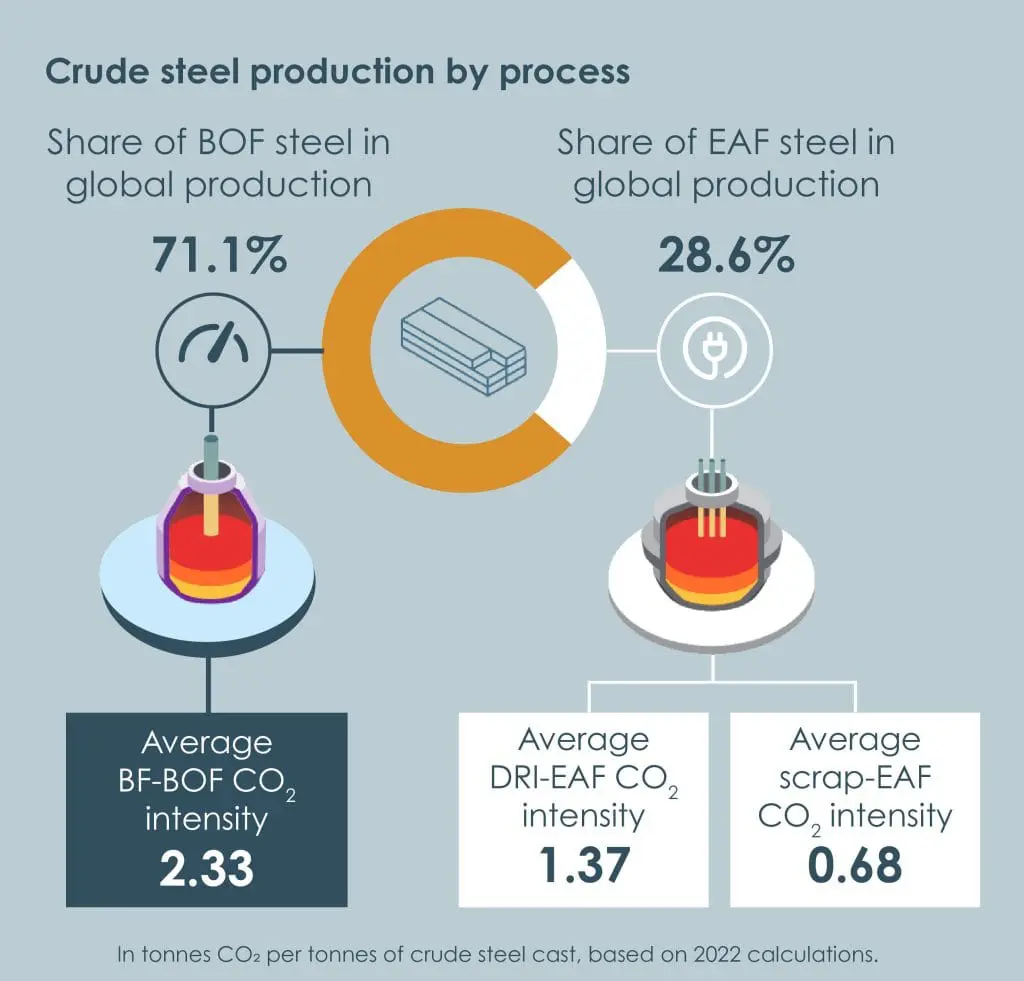
Most DR steel making today is located in the Middle East and to a lesser extent, India and the Americas. The relative proportion of DRI-EAF versus traditional BF-BOF steel mills is increasing due the implementation of various policies and regulations to reduce the carbon footprint of steel production. The most impactful of these regulations is the CBAM (Carbon Border Adjustment Mechanism) which is being rolled out in Europe between 2026 and 2035.
CBAM will impose taxes on steel produced, or imported, into Europe based on the carbon footprint. CBAM is expected to increase the costs of steel produced via the BF-BOF route. For this reason, the shift to low carbon steel making is driving a large increase in the production of steel through the direct reduction route (DRI-EAF) in the Middle East, and a large increase in the associated demand for direct reduction pellets which are indispensable for this technology. The world production of DRI-EAF steel was 136 Mt in 20233 , but there is over 100 Mta of additional Direct Reduction Steel capacity announced and planned to start by 2030. This will require an additional 148 Mta of direct reduction pellets by 2030 which is a huge opportunity for Iron Bear.
DR pellets have very specific and hard to replicate metallisation or reduction properties. Subsequently there are only three substantial producers of DR pellets on the seaborne market today: Vale, IOC, and Samarco.
DR pellets command a premium of USD 63.5/t4 versus the 62% Fe reference index. The associated pelletising conversion costs are ~ USD 15/t. If Iron Bear is able to successfully produce DR grade pellets, Iron Bear could achieve an additional net cash profit of over USD 48.5/t compared to a 62% Fe concentrate.
It should be noted that the depreciation costs associated with the pelletising plant and yields loss associated with the reverse flotation need also to be factored in a rigorous economic analysis, but this remains a game changer for profitability in any reasonable scenarios.
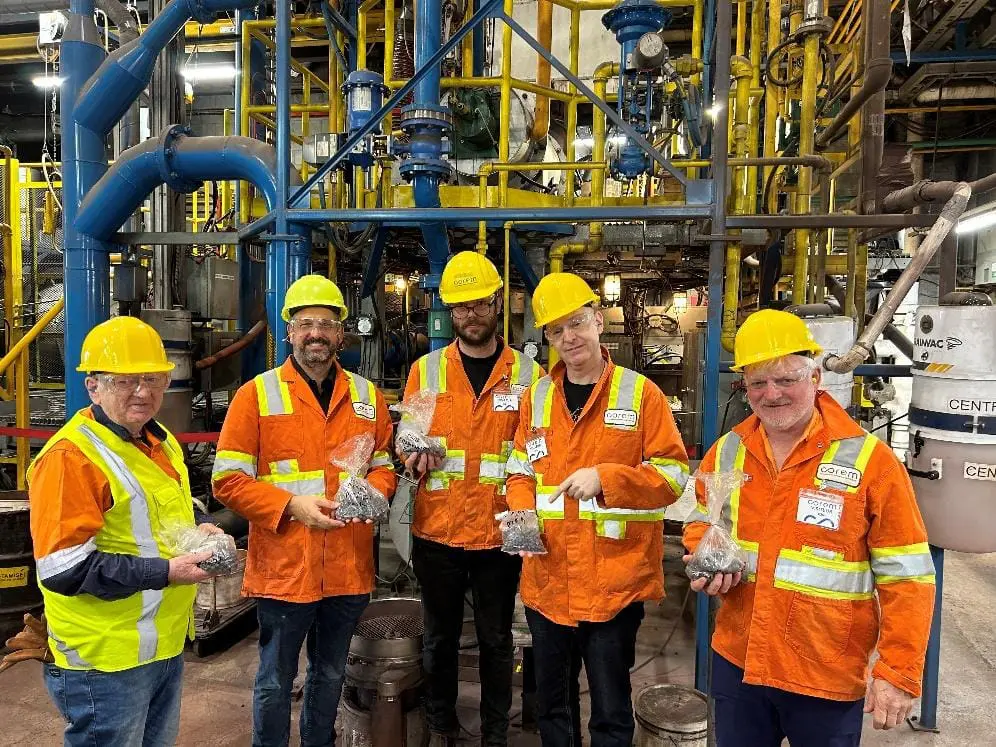
Iron Bear Resources has commissioned COREM, a reputable metallurgical laboratory-based Quebec City, to manufacture and test BF and DR pellets based on Iron Bear BF and DR concentrates.
The manufacturing of pellets required two main steps:
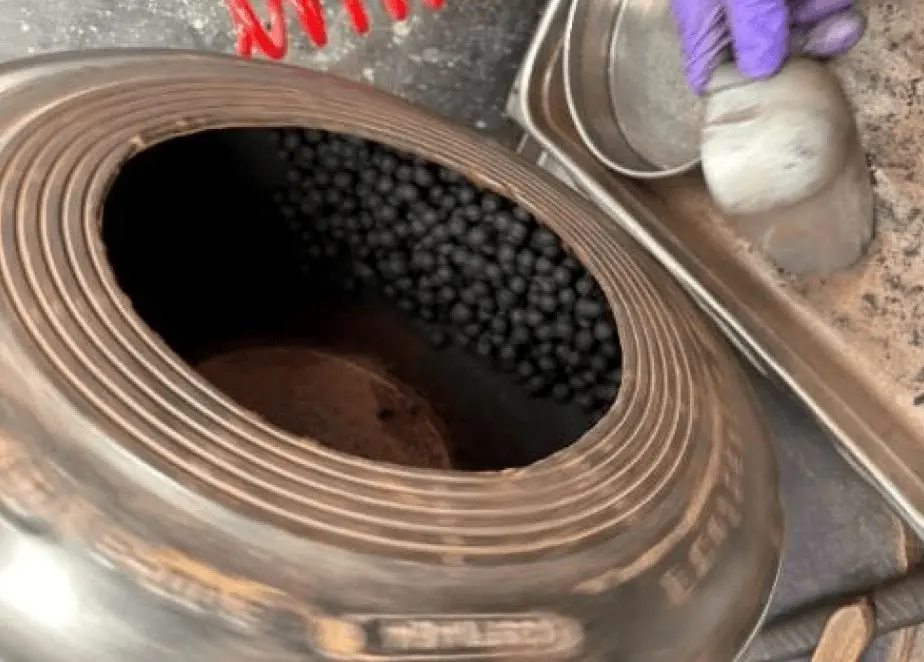
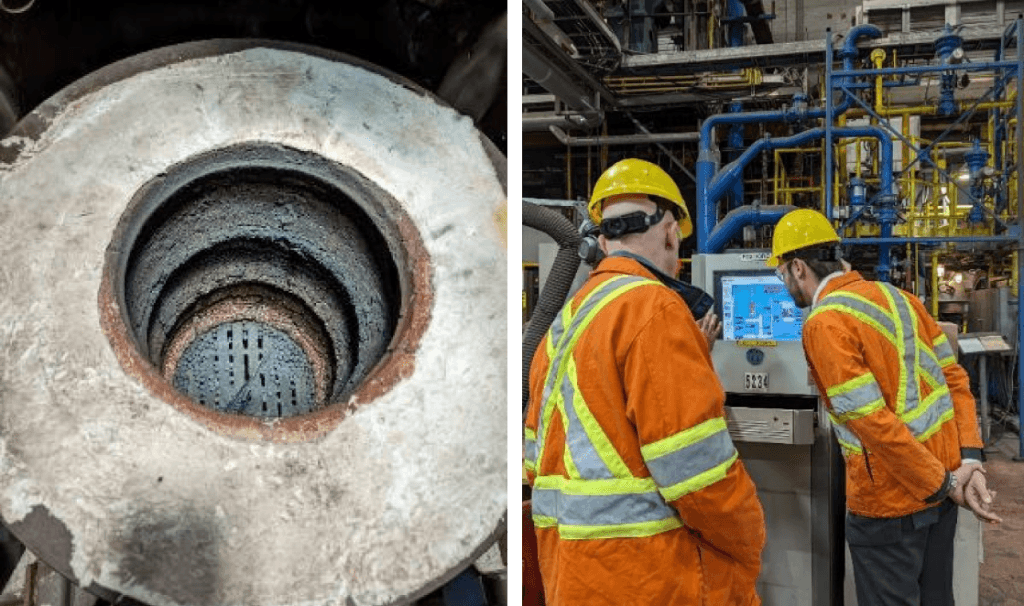
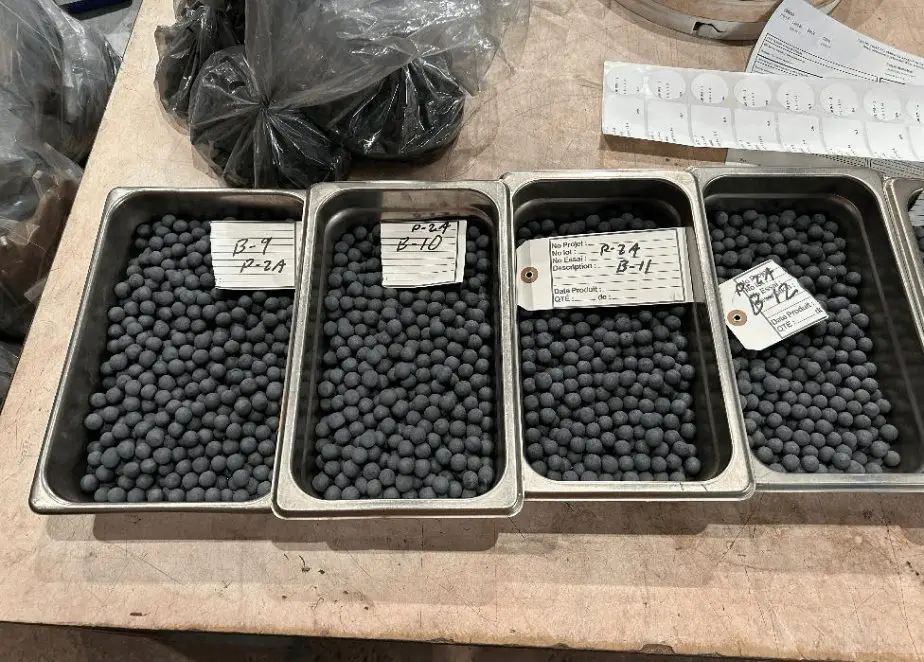
Iron Bear Resources has designed four different chemical compositions for the DR pellets, which have been tested for physical and direct reduction metallisation properties. ions. The chemistry of the tested DR pellets is based on the Iron Bear DR concentrates combined with bentonite and limestone in varying proportions. The resulting chemistry of the four types fired pellets is summarised in the paragraph ‘Iron Bear DR test results.
Numerous tests were conducted on the fired pellets which fall broadly into two categories: physical properties tests and reduction / metallisation tests.
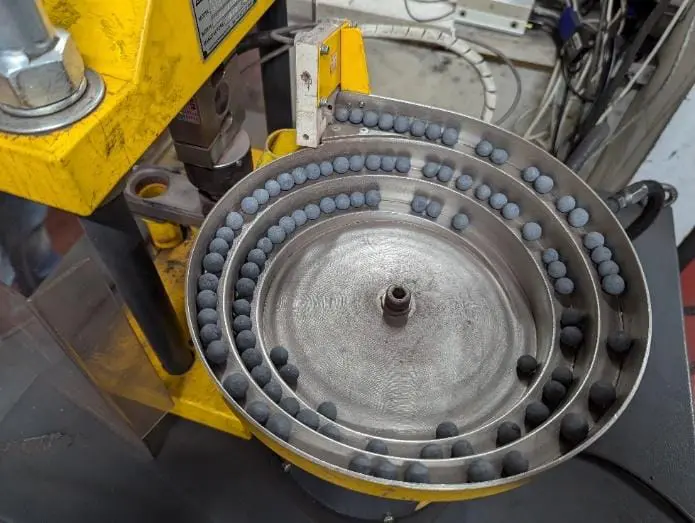
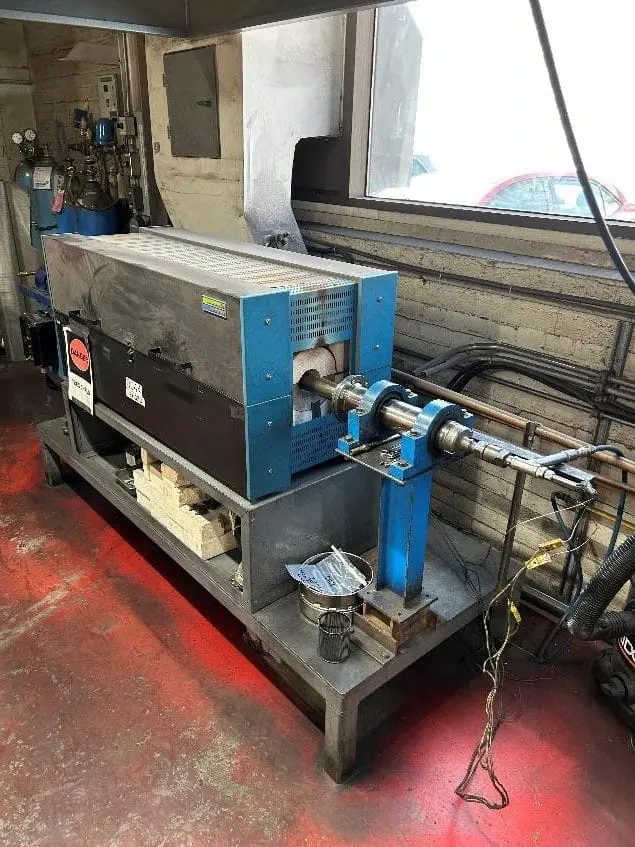
Physical properties tests focus on ensuring that the DR pellets have the required strength to withstand the rough handling in a direct reduction unit and also have the appropriate size and porosity so the reactive gases can permeate the pellet. The most important test is referred to as a CCS test which is essentially a compression test whereby pressure is applied to a pellet until it basically explodes. The test is repeated hundreds of times to determine a statically relevant distribution curve. Figure (6) above shows the compression test rig used at COREM. CCS test results are expressed in kg/pellets and DR pellets typically need a minimum CCS of ~ 230 kg/pellet. The Iron Bear DR pellets demonstrated a CCS of 486-438 kg/pellet which is class leading.
Reduction / metallisation tests focus on ensuring that the fired pellets will convert to Fe in the direct reduction unit with a high metallisation conversion ratio. The reduction tests are specific to the type of direct reduction unit which have different reduction gases and operating conditions. The two main types of reduction units are Midrex and Energiron. COREM has their own direct reduction test protocol which is covers most types of DR units. One of the most popular metallisation test protocols is the Linder test which related to the Energiron process (see figure 6). The Linder test results achieved were excellent with a Linder %-3.15mm of 1 (much lower than target 2) and a metallisation ratio of 96.6%. The COREM r180 test delivered a metallisation ratio of 99.1% – which is … great.
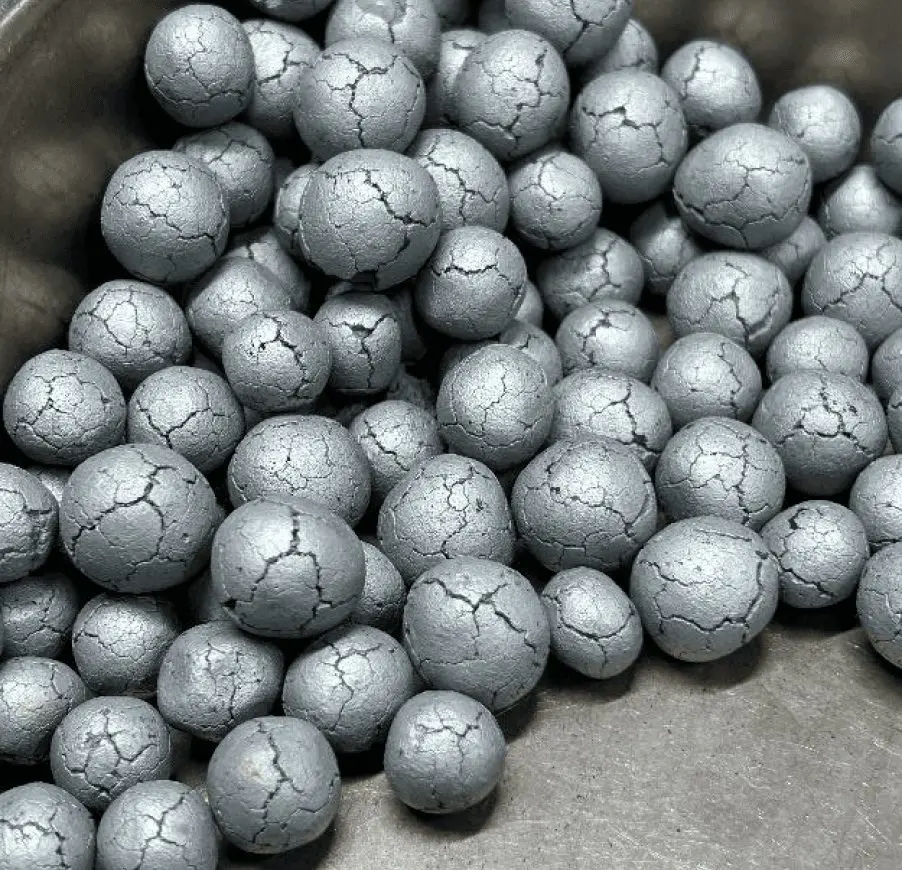
Expanding on the successful pilot production of DR pellets, Iron Bear’s next key milestone is to establish off take agreements with steel mills and/or trading houses, who require a reliable supply of DR pellets for their existing or future direct reduction units. As mentioned previously, we believe that there will be a severe shortage of DR pellets – approximately 148 Mta by 2030 – based on an analysis of the DR steel production units coming online. These offtake agreements will provide cash for the development of the Iron Bear project and facilitate raising the CAPEX after Decision to Mine.
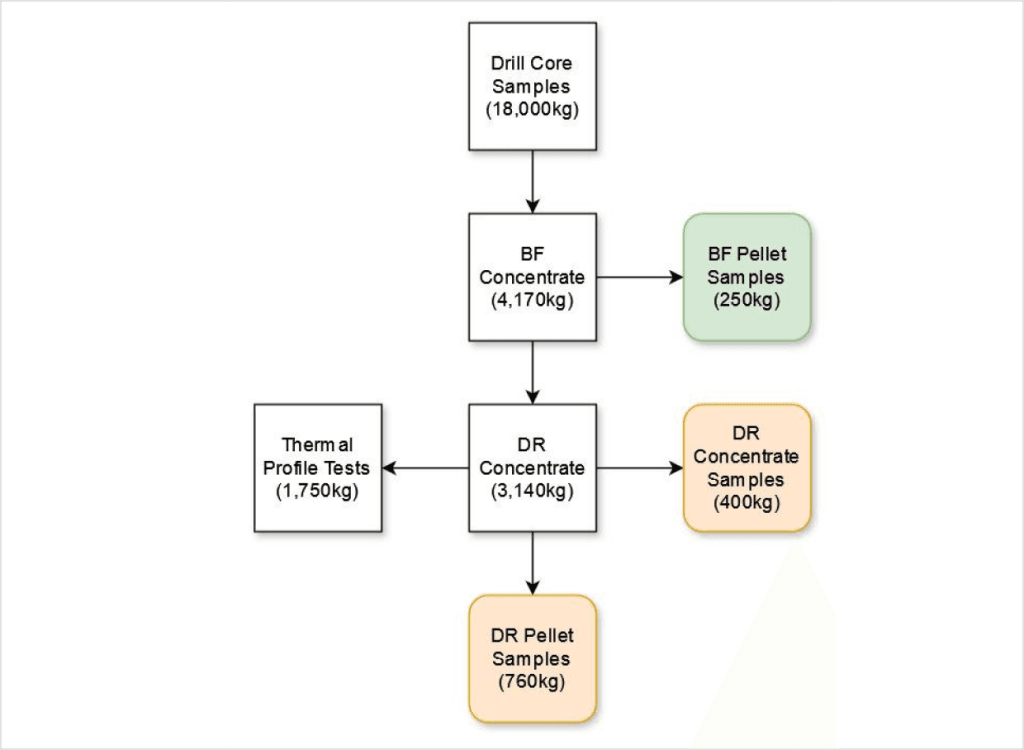
To achieve this, Iron Bear has collected 18t of representative life of mine sediment which has been delivered to COREM and is currently being processed (see figure 9).
Iron Bear will produce 760 kg of DR pellets which will be shipped to target Clients so they can perform their own metallurgical test work to validate the quality of the Iron Bear pellets for their specific application. These applications will likely include low carbon steel production applications for European steels to mitigate the effects of the roll out of the CBAM carbon taxes. This will (hopefully) form the basis for off take agreements which could be concluded as early as Q3 2025.
Figure 10 (to the right) summarises the small scale pilot run which has been started at COREM. Part of the program such as the thermal profile tests are pre-cursors to the Pre-Feasibility Study / FEL2 for the pellet plant.